How to Sue a Property Manager in Small Claims Court
Mismanagement, fee disputes & unauthorized charges
Property management companies occupy a unique position — they manage homes and apartments on behalf of owners, but they can also be directly liable for their own misconduct. Whether you're a tenant dealing with a negligent property manager or an owner whose manager mishandled your property, small claims court is accessible to both.
Success tip
The management agreement (for owners) or lease (for tenants) is the anchor document. Cases that reference specific contract terms win at higher rates.Small Claims Demand Letter Template
 See exactly what you get →
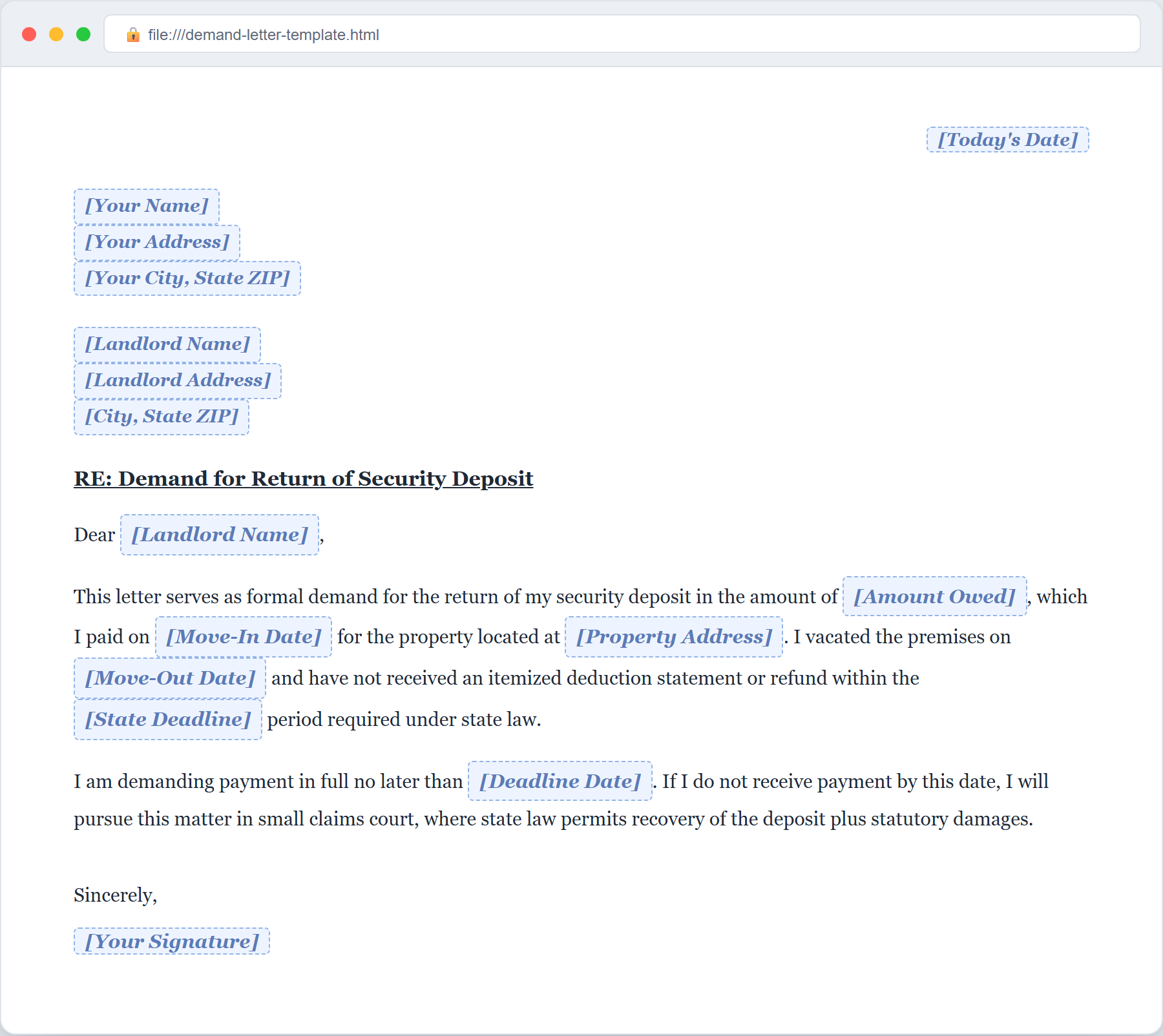
A professionally written demand letter template that puts the other party on notice before you file. Courts expect a demand letter before you sue — and it gets you paid 40% of the time without ever stepping foot in a courtroom. Works in all 50 states.
- 6 variants included: General, Landlord/Tenant, Contractor, Unpaid Loan, Property Damage, Follow-Up Notice
- Fillable HTML — open in any browser, click fields to type, print to PDF when done
- Editable Word (.docx) — fill in Microsoft Word using Find & Replace
- Certified mail instructions included — how to send, what to keep as proof
- Instant download — ready to fill in and send today
Code SUMMER20 = 20% off at checkout
Secure checkout via Payhip · Instant delivery · 30-day guarantee
What You Can Sue a Property Manager For
- ✓ Withheld security deposit without proper accounting
- ✓ Unauthorized fees or charges not in the lease
- ✓ Failure to address maintenance issues causing damage
- ✓ Charged for repairs that weren't made or were overpriced
- ✓ Mishandled tenant rent payments (owner's claim against manager)
- ✓ Manager rented unit below market rate or to unqualified tenant, causing owner losses
Step-by-Step: How to Sue a Property Manager
Check your state's small claims limit
Small claims court handles money disputes only — typically $2,500 to $25,000 depending on your state. Use our Small Claims Limit Calculator to find your state's exact maximum. If your damages exceed the limit, you can reduce your claim to fit or file in a higher civil court.
Send a demand letter first
Property management companies are licensed in most states. If they're violating your state's landlord-tenant laws, file a complaint with your state's real estate licensing board alongside your small claims case. Courts expect plaintiffs to have made a good-faith attempt to resolve the dispute before filing. A demand letter also creates a paper trail that becomes evidence.
Gather your evidence
Your case is only as strong as your evidence. Start collecting everything now — before filing — so you're fully prepared for your hearing. See the evidence checklist below for exactly what you need.
Find the right court and defendant information
File in the small claims court for the county where the property manager is located, does business, or where the dispute occurred. You'll need the defendant's full legal name and address. For businesses, check your state's Secretary of State website for the correct legal entity name and registered agent address.
File your claim and pay the filing fee
Submit the plaintiff's claim form at the courthouse (or online in many states). Filing fees range from $30–$300 depending on your state and claim amount. Use our Filing Fee Calculator to find the exact cost. Keep your file-stamped copy.
Serve the defendant
The defendant must be formally notified of the lawsuit. Many states allow certified mail service; others require a sheriff or process server. Follow the court's instructions exactly — improper service is one of the most common reasons cases get dismissed.
Prepare and attend your hearing
Bring 3 organized copies of all evidence (one for the judge, one for the defendant, one for yourself). Present your case in order: what happened, how much you lost, and why the defendant is responsible. Let the judge ask questions. Most small claims hearings last 15–30 minutes.
Evidence Checklist: Suing a Property Manager
Expert Tips for Your Property Manager Case
Property managers must follow the same landlord-tenant laws as individual landlords. Use your state's specific security deposit statutes to calculate potential double/triple damages.
If you're a property owner disputing a management company, the management agreement is your contract — read every clause carefully before filing.
File a complaint with your state's real estate licensing board — property managers can lose their license for repeated violations, which adds pressure.
Bring the lease or management agreement to court along with a clear timeline of events — judges appreciate organized presentations.
Ready to File? Prepare Your Documents First
LegalZoom helps you draft a professional demand letter and small claims filing documents — reviewed by attorneys. A strong demand letter resolves many disputes before you ever set foot in court.
A local attorney bills $300+/hour for this. LegalZoom does it flat-fee, online.
Related Guides
Small Claims Demand Letter Template
See exactly what you get →
A professionally written demand letter template that puts the other party on notice before you file. Courts expect a demand letter before you sue — and it gets you paid 40% of the time without ever stepping foot in a courtroom. Works in all 50 states.
Code SUMMER20 = 20% off at checkout