How to Sue a Landlord in Small Claims Court
Security deposits, unpaid repairs & habitability disputes
Disputes with landlords are the most common reason people file in small claims court. Whether your landlord wrongfully withheld your security deposit, refused to make required repairs, or overcharged you on rent, small claims gives you a fast, affordable path to recover what you're owed — without an attorney.
Success tip
Tenants win roughly 60–70% of security deposit cases when they have documented move-in/move-out evidence.Small Claims Demand Letter Template
 See exactly what you get →
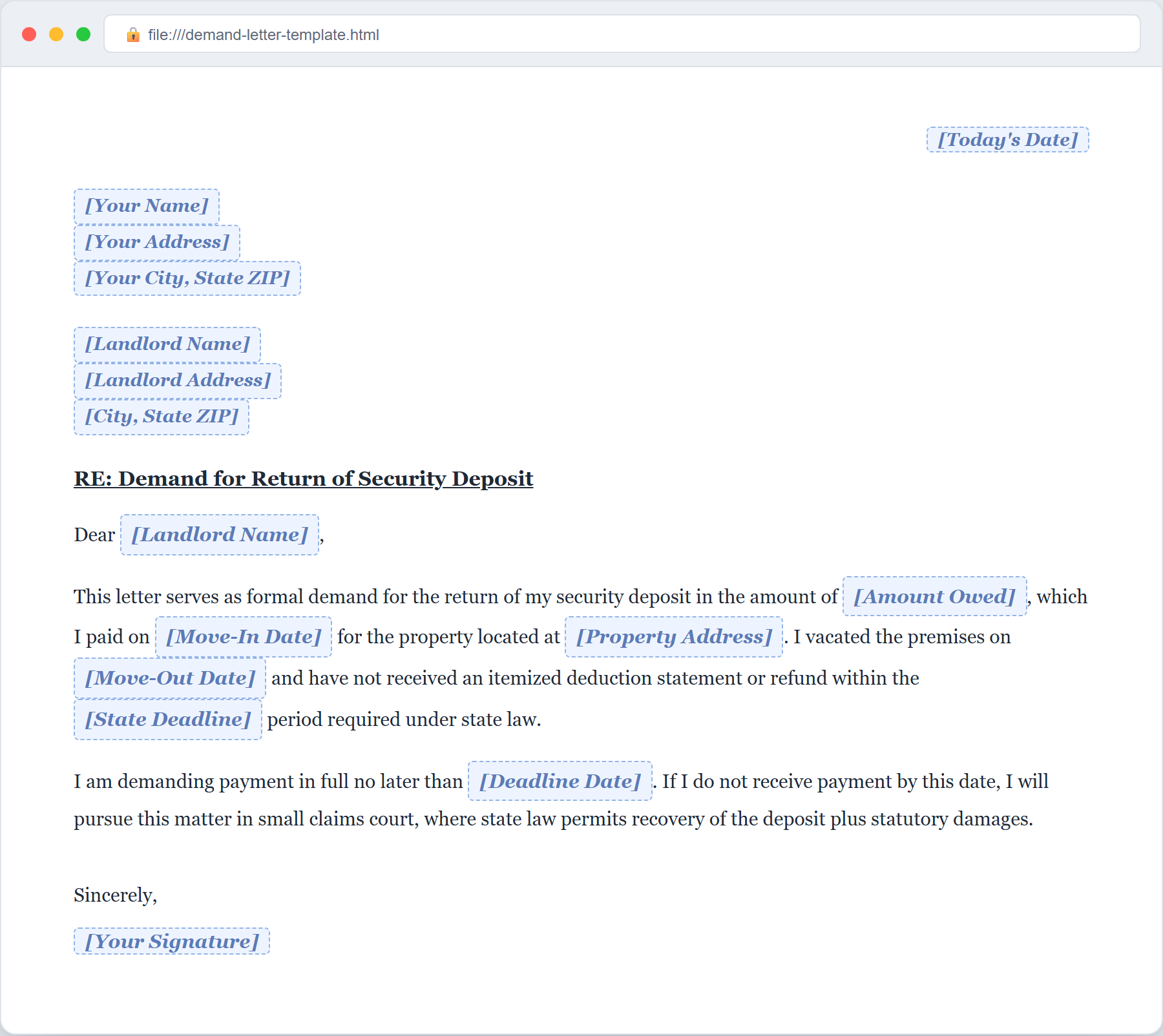
A professionally written demand letter template that puts the other party on notice before you file. Courts expect a demand letter before you sue — and it gets you paid 40% of the time without ever stepping foot in a courtroom. Works in all 50 states.
- 6 variants included: General, Landlord/Tenant, Contractor, Unpaid Loan, Property Damage, Follow-Up Notice
- Fillable HTML — open in any browser, click fields to type, print to PDF when done
- Editable Word (.docx) — fill in Microsoft Word using Find & Replace
- Certified mail instructions included — how to send, what to keep as proof
- Instant download — ready to fill in and send today
Code SUMMER20 = 20% off at checkout
Secure checkout via Payhip · Instant delivery · 30-day guarantee
What You Can Sue a Landlord For
- ✓ Security deposit not returned within the legally required deadline
- ✓ Improper or excessive deductions from your security deposit
- ✓ Failure to make required habitability repairs
- ✓ Overcharged rent or illegal fees
- ✓ Wrongful early termination penalties
- ✓ Property damage caused by landlord or their contractors
Step-by-Step: How to Sue a Landlord
Check your state's small claims limit
Small claims court handles money disputes only — typically $2,500 to $25,000 depending on your state. Use our Small Claims Limit Calculator to find your state's exact maximum. If your damages exceed the limit, you can reduce your claim to fit or file in a higher civil court.
Send a demand letter first
Send a formal demand letter via certified mail at least 14–30 days before filing. Many states require written demand before you can claim double or triple damages for unreturned deposits. Courts expect plaintiffs to have made a good-faith attempt to resolve the dispute before filing. A demand letter also creates a paper trail that becomes evidence.
Gather your evidence
Your case is only as strong as your evidence. Start collecting everything now — before filing — so you're fully prepared for your hearing. See the evidence checklist below for exactly what you need.
Find the right court and defendant information
File in the small claims court for the county where the landlord is located, does business, or where the dispute occurred. You'll need the defendant's full legal name and address. For businesses, check your state's Secretary of State website for the correct legal entity name and registered agent address.
File your claim and pay the filing fee
Submit the plaintiff's claim form at the courthouse (or online in many states). Filing fees range from $30–$300 depending on your state and claim amount. Use our Filing Fee Calculator to find the exact cost. Keep your file-stamped copy.
Serve the defendant
The defendant must be formally notified of the lawsuit. Many states allow certified mail service; others require a sheriff or process server. Follow the court's instructions exactly — improper service is one of the most common reasons cases get dismissed.
Prepare and attend your hearing
Bring 3 organized copies of all evidence (one for the judge, one for the defendant, one for yourself). Present your case in order: what happened, how much you lost, and why the defendant is responsible. Let the judge ask questions. Most small claims hearings last 15–30 minutes.
Evidence Checklist: Suing a Landlord
Expert Tips for Your Landlord Case
Check your state's security deposit return deadline — it ranges from 14 to 45 days. Miss that deadline and you may be entitled to the full deposit back regardless of property condition.
Many states allow double or triple damages if the landlord willfully withheld your deposit without cause. Look up your state's rules.
File in the court where the rental property is located, not where you currently live.
Bring 3 copies of all evidence: one for the judge, one for the landlord, one for yourself.
Ready to File? Prepare Your Documents First
LegalZoom helps you draft a professional demand letter and small claims filing documents — reviewed by attorneys. A strong demand letter resolves many disputes before you ever set foot in court.
A local attorney bills $300+/hour for this. LegalZoom does it flat-fee, online.
Related Guides
Small Claims Demand Letter Template
See exactly what you get →
A professionally written demand letter template that puts the other party on notice before you file. Courts expect a demand letter before you sue — and it gets you paid 40% of the time without ever stepping foot in a courtroom. Works in all 50 states.
Code SUMMER20 = 20% off at checkout