How to File Small Claims Court by State
Select your state for a complete guide — filing fees, claim limits, statute of limitations, and step-by-step instructions.
How to File Small Claims Court — 7 Steps
Small claims court is designed for people without attorneys. The process is the same in every state — the only things that change are the dollar limits, filing fees, and court names. Here is exactly what to do.
You can recover the filing fee
When you win, ask the judge to add your filing fee to the judgment. The defendant then owes you the original claim amount plus court costs.State-specific instructions matter
Court names, form names, and service rules vary by state. Select your state below for exact fees, forms, and local filing instructions.Select Your State
Small Claims Demand Letter Template
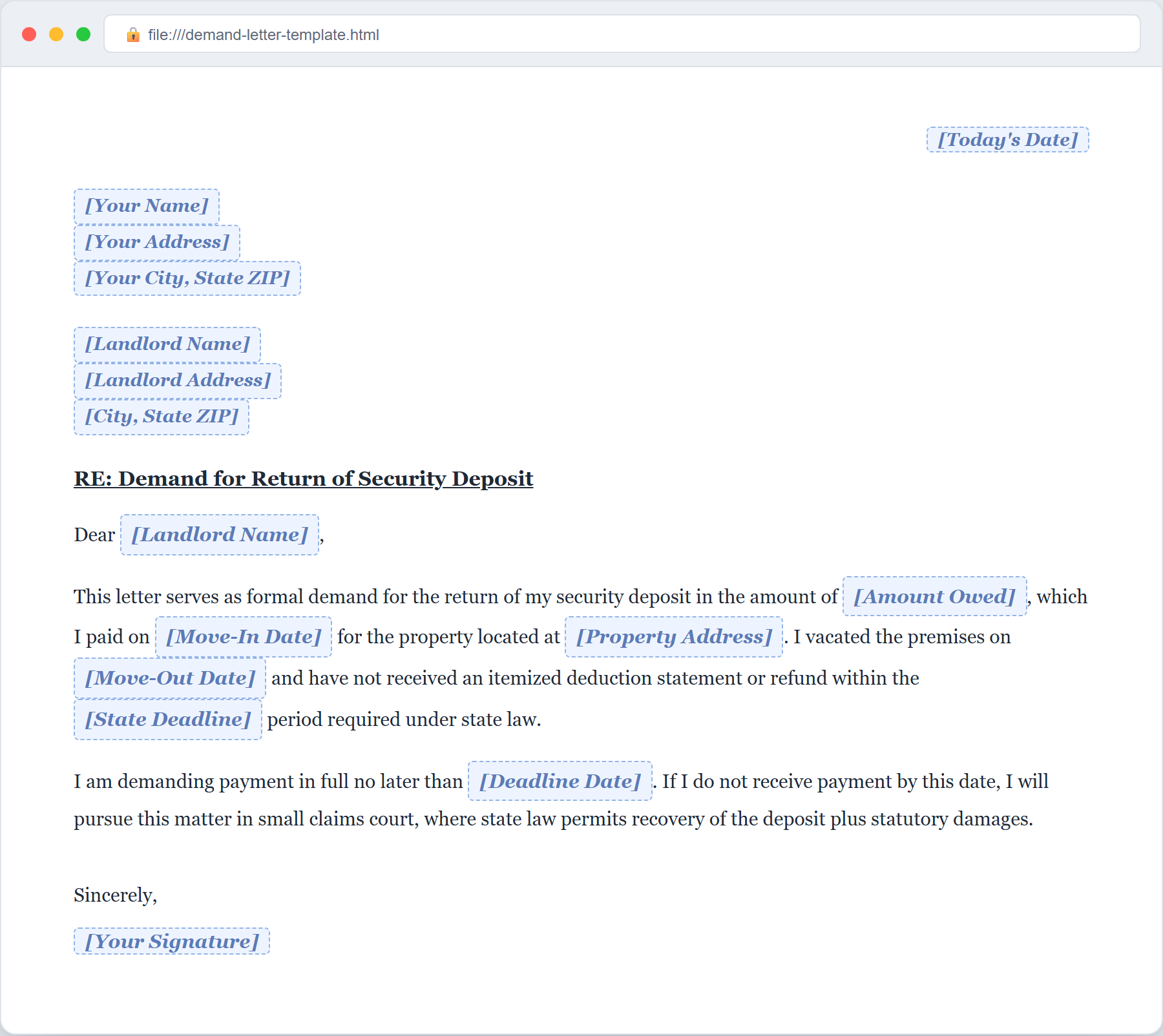 See exactly what you get →
A professionally written demand letter template that puts the other party on notice before you file. Courts expect a demand letter before you sue — and it gets you paid 40% of the time without ever stepping foot in a courtroom. Works in all 50 states.
Code SUMMER20 = 20% off at checkout
Won your case? Now get paid.
Our judgment collection guides cover wage garnishment, bank levies, and property liens — with step-by-step instructions for every state.
Small Claims Court — All States at a Glance
| State | Court Name | Max Claim | Filing Fee |
|---|---|---|---|
| Alabama | Small Claims Court | $6,000 | $45–$85 |
| Alaska | District Court | $10,000 | $30–$100 |
| Arizona | Justice Court | $3,500 | $29–$78 |
| Arkansas | Small Claims Division | $5,000 | $35–$65 |
| California | Small Claims Court | $12,500 | $30–$100 |
| Colorado | County Court | $7,500 | $31–$55 |
| Connecticut | Small Claims Court | $5,000 | $35–$75 |
| Delaware | Justice of the Peace Court | $25,000 | $35–$100 |
| Florida | County Court | $8,000 | $55–$300 |
| Georgia | Magistrate Court | $15,000 | $45–$75 |
| Hawaii | Small Claims Division | $5,000 | $35–$60 |
| Idaho | Small Claims Department | $5,000 | $33–$66 |
| Illinois | Small Claims Court | $10,000 | $56–$254 |
| Indiana | Small Claims Court | $10,000 | $35–$85 |
| Iowa | Small Claims Court | $6,500 | $35–$65 |
| Kansas | Small Claims Court | $4,000 | $35–$50 |
| Kentucky | Small Claims Court | $2,500 | $28–$58 |
| Louisiana | City Court / Justice of the Peace | $5,000 | $75–$150 |
| Maine | District Court | $6,000 | $50–$80 |
| Maryland | District Court | $5,000 | $34–$58 |
| Massachusetts | Small Claims Session | $7,000 | $40–$150 |
| Michigan | Small Claims Division | $6,500 | $30–$70 |
| Minnesota | Conciliation Court | $15,000 | $75–$110 |
| Mississippi | Justice Court | $3,500 | $35–$60 |
| Missouri | Small Claims Court | $5,000 | $35–$60 |
| Montana | Justice Court | $7,000 | $30–$70 |
| Nebraska | County Court | $3,600 | $29–$45 |
| Nevada | Justice Court | $10,000 | $46–$92 |
| New Hampshire | District Court | $10,000 | $45–$95 |
| New Jersey | Special Civil Part | $5,000 | $35–$75 |
| New Mexico | Magistrate Court | $10,000 | $35–$65 |
| New York | Small Claims Court | $10,000 | $15–$20 |
| North Carolina | Magistrate Court | $10,000 | $96–$156 |
| North Dakota | Small Claims Court | $15,000 | $35–$65 |
| Ohio | Small Claims Division | $6,000 | $35–$80 |
| Oklahoma | Small Claims Court | $10,000 | $45–$95 |
| Oregon | Small Claims Department | $10,000 | $52–$95 |
| Pennsylvania | Magisterial District Court | $12,000 | $45–$100 |
| Rhode Island | Small Claims Court | $2,500 | $75–$85 |
| South Carolina | Magistrate Court | $7,500 | $80–$140 |
| South Dakota | Small Claims Court | $12,000 | $40–$75 |
| Tennessee | General Sessions Court | $25,000 | $75–$170 |
| Texas | Justice Court | $20,000 | $54–$121 |
| Utah | Small Claims Court | $11,000 | $60–$100 |
| Vermont | Small Claims Court | $5,000 | $55–$90 |
| Virginia | General District Court | $5,000 | $30–$75 |
| Washington | Small Claims Department | $10,000 | $31–$50 |
| West Virginia | Magistrate Court | $10,000 | $30–$100 |
| Wisconsin | Small Claims Court | $10,000 | $50–$95 |
| Wyoming | Circuit Court | $6,000 | $25–$55 |