How to File Small Claims in Utah (2026)
A complete step-by-step guide to filing in Utah's Small Claims Court — including fees, limits, and what to bring to your hearing.
Send a demand letter first
Before filing, send a written demand to the other party. Many disputes settle without court — and if they don't, having a written record of your demand strengthens your case.Small Claims Demand Letter Template
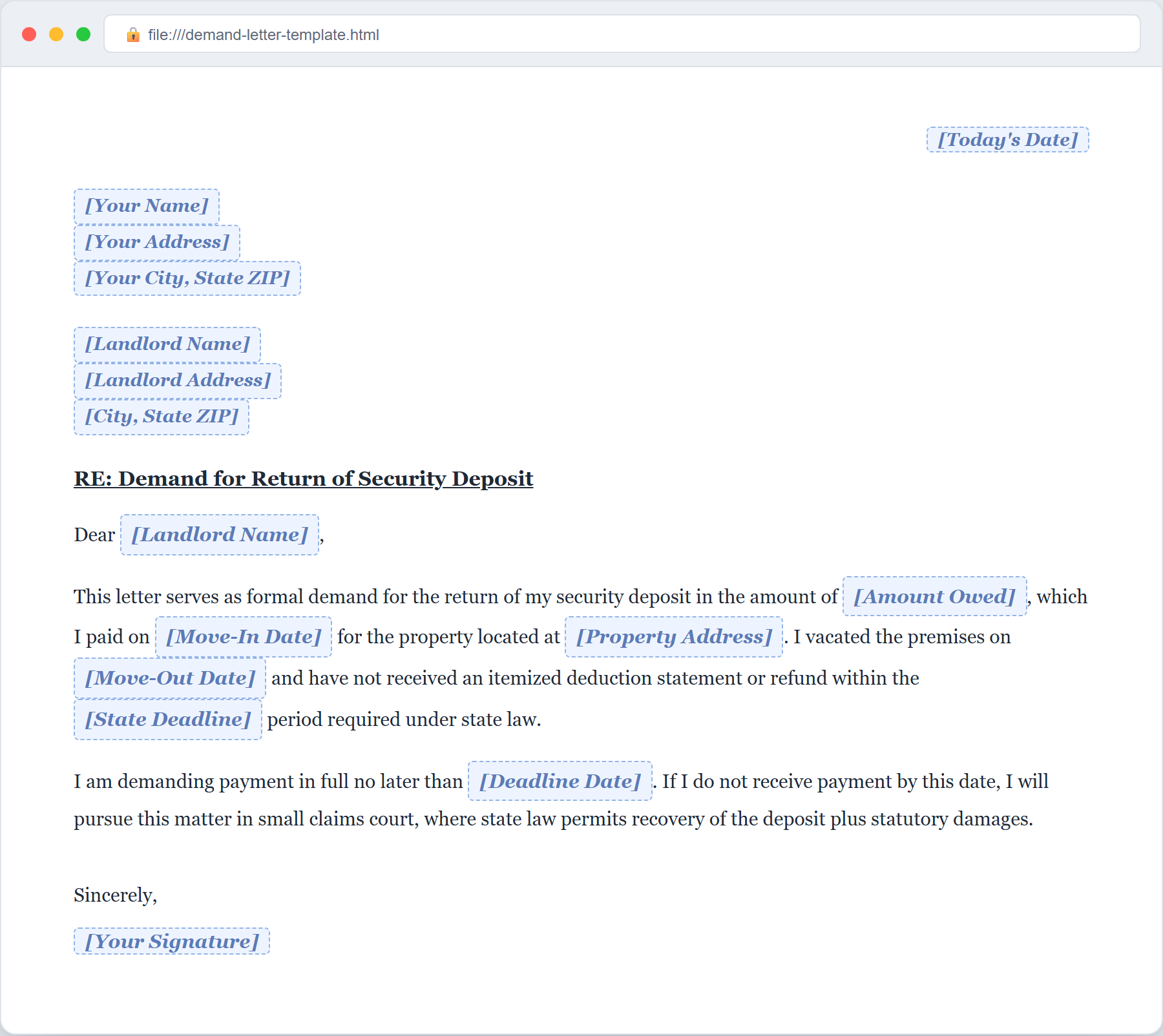 See exactly what you get →
A professionally written demand letter template that puts the other party on notice before you file. Courts expect a demand letter before you sue — and it gets you paid 40% of the time without ever stepping foot in a courtroom. Works in all 50 states.
- 6 variants included: General, Landlord/Tenant, Contractor, Unpaid Loan, Property Damage, Follow-Up Notice
- Fillable HTML — open in any browser, click fields to type, print to PDF when done
- Editable Word (.docx) — fill in Microsoft Word using Find & Replace
- Certified mail instructions included — how to send, what to keep as proof
- Instant download — ready to fill in and send today
Code SUMMER20 = 20% off at checkout
Secure checkout via Payhip · Instant delivery · 30-day guarantee
Step-by-Step: Filing Small Claims in Utah
Confirm your claim qualifies
Your claim must be for money only — not an injunction or other remedy. In Utah, the maximum you can sue for in small claims court is $11,000. If your damages exceed this amount, you can either reduce your claim to fit the limit or file in a higher civil court.
Check the statute of limitations
You must file within the statute of limitations for your claim type. In Utah: written contracts — 6 years, oral contracts — 4 years, property damage — 3 years. Filing after the deadline means your case will be dismissed.
Gather your evidence
Before filing, organize all evidence supporting your claim: contracts, invoices, receipts, photos, text messages, emails, and witness information. Bring originals plus at least 3 copies to your hearing (one for the judge, one for the defendant, one for yourself).
Get the claim form
Obtain the plaintiff's claim form from the Small Claims Court in the county where the defendant lives or where the dispute occurred. Many Utah courts also offer forms on their website. Fill out the defendant's full legal name and address accurately — incorrect defendant information can get your case dismissed.
File and pay the fee
Submit your completed form to the court clerk and pay the filing fee of $60–$100. Utah courts accept e-filing with an additional $5 fee. If you cannot afford the filing fee, ask the clerk for a fee waiver form (typically based on income below 125% of the federal poverty level).
Serve the defendant
The court will assign a hearing date. You are required to formally notify (serve) the defendant. Utah courts typically allow service by certified mail, sheriff, or process server. Keep proof of service — you will need it at the hearing.
Attend your hearing
Arrive early and dressed professionally. Present your case clearly and concisely. Stick to the facts, show your evidence, and let the judge ask questions. The defendant will have a chance to respond. Most small claims hearings last 15–30 minutes. Tip: Utah allows online filing and virtual hearings — one of the most modernized systems.
Collect your judgment
Winning a judgment does not automatically mean you get paid. If the defendant does not pay voluntarily, you can garnish their wages, levy their bank account, or place a lien on their property. See our full guide: How to collect a judgment in Utah →
Get a court date reminder
Enter your hearing date — we'll send a preparation checklist 7 days out, and a final reminder the night before. Free.
Want Help Preparing Your Case Documents?
LegalZoom helps you draft a demand letter and small claims filing documents for Utah — reviewed by attorneys. A strong demand letter resolves many disputes before the hearing.
A local attorney bills $300+/hour for this. LegalZoom does it flat-fee, online.
You can recover filing costs if you win
Ask the judge to add your $60–$100 filing fee to the judgment. If you win, the defendant owes you the original claim plus court costs.Utah Small Claims — Key Facts
| Court name | Small Claims Court |
| Maximum claim limit | $11,000 |
| Filing fee | $60–$100 |
| E-filing fee | $5 |
| Written contract SOL | 6 years |
| Oral contract SOL | 4 years |
| Property damage SOL | 3 years |
Source: Utah Small Claims Court ↗
Small Claims Demand Letter Template
See exactly what you get →
A professionally written demand letter template that puts the other party on notice before you file. Courts expect a demand letter before you sue — and it gets you paid 40% of the time without ever stepping foot in a courtroom. Works in all 50 states.
Code SUMMER20 = 20% off at checkout