2026 Guide Tennessee 25 Dispute Types
Tennessee Small Claims Court — Dispute Guides
Select who you're suing for a guide tailored to Tennessee's court rules, the $25,000 limit, and your specific dispute type.
$25,000
SC limit
$75–$170
Filing fee
General Sessions Court
Court name
Who Are You Suing in Tennessee?
Landlord
$500–$5,000 Security deposits, unpaid repairs & habitability disputes
Tennessee guide →
Contractor
$500–$10,000 Incomplete work, shoddy repairs & contractor fraud
Tennessee guide →
Employer
$200–$7,500 Unpaid wages, last paycheck & withheld commissions
Tennessee guide →
Amazon
$50–$2,000 Damaged goods, undelivered orders & third-party seller disputes
Tennessee guide →
Car Dealer
$500–$10,000 Undisclosed damage, deposit disputes & lemon car issues
Tennessee guide →
Insurance Company
$500–$10,000 Claim denials, underpayment & bad faith delays
Tennessee guide →
Neighbor
$200–$5,000 Property damage, fence disputes & nuisance claims
Tennessee guide →
Mechanic / Auto Shop
$200–$5,000 Overcharges, unauthorized repairs & damage while in their care
Tennessee guide →
Roommate
$200–$5,000 Unpaid rent, stolen deposits & property damage
Tennessee guide →
Airline
$100–$3,000 Canceled flights, baggage loss & denied boarding compensation
Tennessee guide →
Airbnb / VRBO
$200–$3,000 Host disputes, property damage & refund denials
Tennessee guide →
Moving Company
$500–$8,000 Damaged belongings, inflated bills & hostage loads
Tennessee guide →
Online Seller (eBay, Facebook, Craigslist)
$100–$3,000 Misrepresented items, non-delivery & fraud
Tennessee guide →
Dog Owner
$200–$10,000 Bite injuries, property damage & vet bills
Tennessee guide →
Friend or Family Member
$100–$5,000 Unpaid loans, bounced checks & personal money disputes
Tennessee guide →
Uber or Lyft
$100–$5,000 Accidents, overcharges & property damage
Tennessee guide →
Hotel
$100–$5,000 Injury, overcharges & accommodation disputes
Tennessee guide →
Store / Retailer
$50–$3,000 Return disputes, defective products & overcharges
Tennessee guide →
Car Accident (Other Driver)
$500–$10,000 Vehicle damage, injuries & uninsured drivers
Tennessee guide →
Cell Phone Company
$100–$2,000 Overcharges, broken contracts & deposit disputes
Tennessee guide →
Gym / Fitness Club
$100–$1,500 Membership cancellation disputes & unauthorized charges
Tennessee guide →
Wedding Vendor
$500–$10,000 Deposit disputes, no-shows & broken vendor contracts
Tennessee guide →
Doctor / Medical Provider
$200–$5,000 Billing errors, overcharges & surprise bills
Tennessee guide →
Property Manager
$300–$8,000 Mismanagement, fee disputes & unauthorized charges
Tennessee guide →
Internet / Cable Provider
$100–$2,000 Overcharges, broken speed promises & equipment deposits
Tennessee guide →
Best Seller
Small Claims Demand Letter Template
$14
instant download
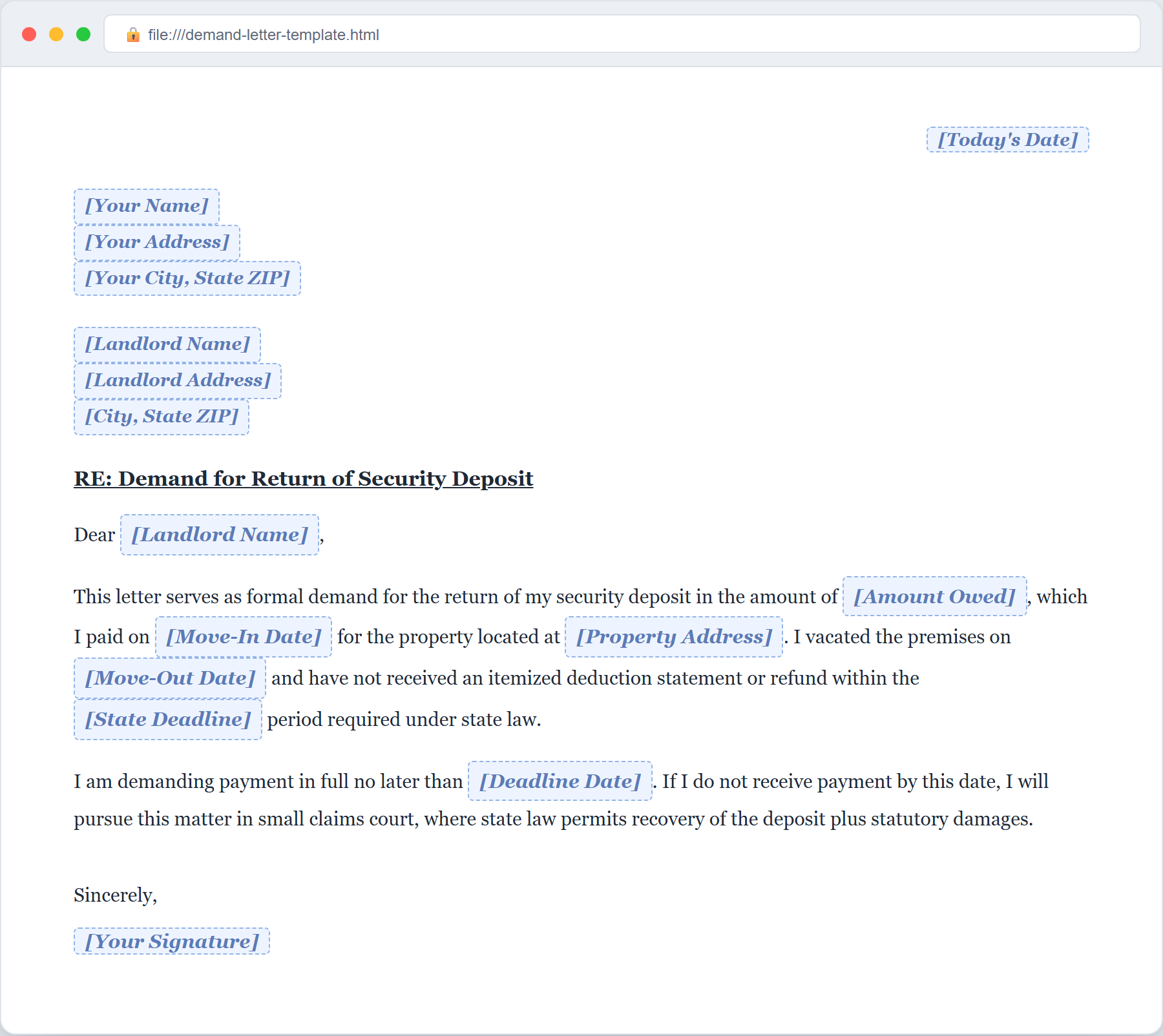 See exactly what you get →
A professionally written demand letter template that puts the other party on notice before you file. Courts expect a demand letter before you sue — and it gets you paid 40% of the time without ever stepping foot in a courtroom. Works in all 50 states.
Lawyer-written letter
$300+
This download
$14
You keep
$286+
- 6 variants included: General, Landlord/Tenant, Contractor, Unpaid Loan, Property Damage, Follow-Up Notice
- Fillable HTML — open in any browser, click fields to type, print to PDF when done
- Editable Word (.docx) — fill in Microsoft Word using Find & Replace
- Certified mail instructions included — how to send, what to keep as proof
- Instant download — ready to fill in and send today
HTMLWord (.docx)
Code SUMMER20 = 20% off at checkout
Secure checkout via Payhip · Instant delivery · 30-day guarantee
Tennessee Small Claims — At a Glance
Court name General Sessions Court
Maximum claim $25,000
Filing fee range $75–$170
Written contract SoL 6 years
Property damage SoL 3 years
Oral contract SoL 6 years
Tennessee tip
Tennessee has the highest small claims limit in the US at $25,000 — a major advantage for plaintiffs.Frequently Asked Questions
What is the small claims limit in Tennessee?
The small claims limit in Tennessee is $25,000. This is the maximum dollar amount you can sue for in the General Sessions Court. If your actual damages exceed this amount, you can reduce your claim to fit within the limit or file in a higher civil court for the full amount.
How do I file a small claims case in Tennessee?
To file a small claims case in Tennessee: (1) get the plaintiff's claim form from the General Sessions Court or its website; (2) complete it with the defendant's full legal name and address; (3) file at the courthouse and pay the $75–$170 filing fee; (4) serve the defendant; (5) attend your hearing with all evidence.
How long do I have to file a small claims case in Tennessee?
In Tennessee, the statute of limitations for written contracts is 6 years and for oral contracts is 6 years. You must file before this deadline — courts dismiss time-barred claims regardless of merit. The clock starts from the date of the dispute or breach.
Can I bring a lawyer to small claims court in Tennessee?
Attorney representation rules in Tennessee small claims court vary. Most small claims cases are handled without lawyers — the simplified process and short hearing times make self-representation practical. If the amount is significant or the issues are complex, a brief attorney consultation before the hearing (not at the hearing) can help you prepare your case.
What happens if I win but the other party doesn't pay in Tennessee?
If the other party refuses to pay your judgment, you can use enforcement tools: wage garnishment, bank account levy, or a property lien recorded with the county. All require a Writ of Execution from the court. Your judgment also earns post-judgment interest while unpaid. See our full Tennessee judgment collection guide for step-by-step enforcement instructions.