How to Sue a Neighbor in Indiana Small Claims Court
Property damage, fence disputes & nuisance claims
In Indiana, neighbor disputes are handled in the Small Claims Court. You can sue for up to $10,000 without a lawyer — making small claims the fastest and most affordable way to resolve a neighbor dispute. Neighbor disputes over property damage, boundary lines, and nuisances are common in small claims court. Whether your neighbor's tree fell on your fence or their dog destroyed your garden, small claims is the practical alternative to expensive litigation over relatively modest amounts.
Indiana tip
Indiana has a 10-year statute of limitations on written contracts — one of the longest.Success tip
Cases with clear property boundaries (survey) and documented damage repair estimates typically win.Indiana-Specific Procedure
Indiana ties tree ownership to where the trunk stands and allows a neighbor to trim encroaching limbs or roots from their own side using sound pruning practices; killing or seriously harming the tree creates liability. Indiana's spite fence statute (IC 32-26-10-1) lets you sue over a fence built over 6 feet tall purely to annoy you. File in Indiana Small Claims Court up to $10,000.
Small Claims Demand Letter Template
$300+$14you keep $286+A professionally written demand letter template that puts the other party on notice before you file. Courts expect a demand letter before you sue — and it gets you paid 40% of the time without ever stepping foot in a courtroom. Works in all 50 states.
See exactly what you get →Code SUMMER20 = 20% off at checkout
What You Can Sue a Neighbor For in Indiana
- ✓ Neighbor's tree fell and damaged your property
- ✓ Fence damage caused by neighbor's actions
- ✓ Property encroachment (structure built over boundary line)
- ✓ Water runoff or flooding damage from neighbor's property
- ✓ Damage caused by neighbor's pet or livestock
- ✓ Unpaid shared fence or property maintenance costs
Indiana Small Claims — Key Facts
Look Up the Neighbor's Legal Name Before Filing
To sue a neighbor in Indiana, you must use their exact registered legal name on the court filing. An incorrect name can get your case dismissed. Search the official Indiana Secretary of State database to find their correct legal name and registered agent address.
Step-by-Step: Suing a Neighbor in Indiana
Confirm your claim is within Indiana's $10,000 limit
Indiana's small claims limit is $10,000. If your damages are higher, you can reduce your claim to the limit or file in Indiana civil court. Use our Indiana Small Claims Limit guide for the full details.
Send a demand letter first
Before filing, send a friendly but formal written notice to your neighbor outlining the damage and requested remedy. Courts view good-faith attempts at resolution positively. Courts in Indiana expect plaintiffs to have made a good-faith attempt to resolve the dispute. A demand letter also creates a paper trail and often prompts payment without any court filing.
Gather your evidence
Your case is only as strong as your evidence. Collect everything before filing — see the checklist below for exactly what you need for a neighbor dispute.
Find the right Indiana courthouse
File at the Small Claims Court in the Indiana county where the neighbor is located, does business, or where the dispute occurred. Before filing, look up the neighbor's correct legal name and registered agent on the Indiana Secretary of State →. Using the wrong legal name is a common reason cases are dismissed.
Pay the filing fee ($35–$85)
Indiana small claims filing fees range from $35 to $85 depending on your claim amount. Use our Indiana Filing Fee Calculator to find the exact amount for your claim. Keep your file-stamped copy.
Serve the defendant properly
The neighbor must be formally notified of the lawsuit. Indiana courts provide specific instructions — follow them exactly. Improper service is one of the most common reasons cases are dismissed.
Present your case at the hearing
Bring 3 organized copies of all evidence. Present your case in order: what happened, how much you lost, and why the neighbor is responsible. Most Indiana small claims hearings last 15–30 minutes. Stay calm, stick to facts, and let the judge ask questions.
Sample Demand Letter: Neighbor Dispute
Send this demand letter via certified mail before filing. Courts view prior good-faith attempts favorably, and many disputes settle at this stage. Replace the bracketed placeholders with your details.
I am writing to demand $[AMOUNT] in compensation from [DEFENDANT NAME] for property damage caused by [INCIDENT DESCRIPTION] on or about [DATE]. As [PLAINTIFF NAME], your actions — whether through encroachment, negligence, or failure to control your property — have caused direct, documented damage to my property for which you are legally responsible. I have made reasonable attempts to resolve this matter informally without success. I request that you compensate me for the full cost of repairs or the fair market value of the damage within 14 days of receiving this letter, or I will file a claim against you in small claims court.
This is a template only — not legal advice. Consult an attorney if your situation is complex or the amount is significant.
Evidence Checklist: Suing a Neighbor in Indiana
Tips for Winning Your Neighbor Case in Indiana
Neighbor cases are often emotional — stay focused on facts and dollars in court. Judges respond to evidence, not he-said-she-said.
If the dispute involves a boundary line, a professional land survey is almost essential — it typically costs $300–$500 but settles the matter definitively.
Check your homeowner's insurance first — your policy may cover neighbor-caused damage and let your insurer pursue the neighbor for you (subrogation).
Document everything in writing before filing. A text message where your neighbor admits fault is worth more than your oral testimony.
Ready to File? Prepare Your Documents First
LegalZoom helps you draft a demand letter and small claims filing documents for Indiana — reviewed by attorneys. Most cases settle after a proper demand letter.
A local attorney bills $300+/hour for this. LegalZoom does it flat-fee, online.
Other Indiana Small Claims Guides
Small Claims Demand Letter Template
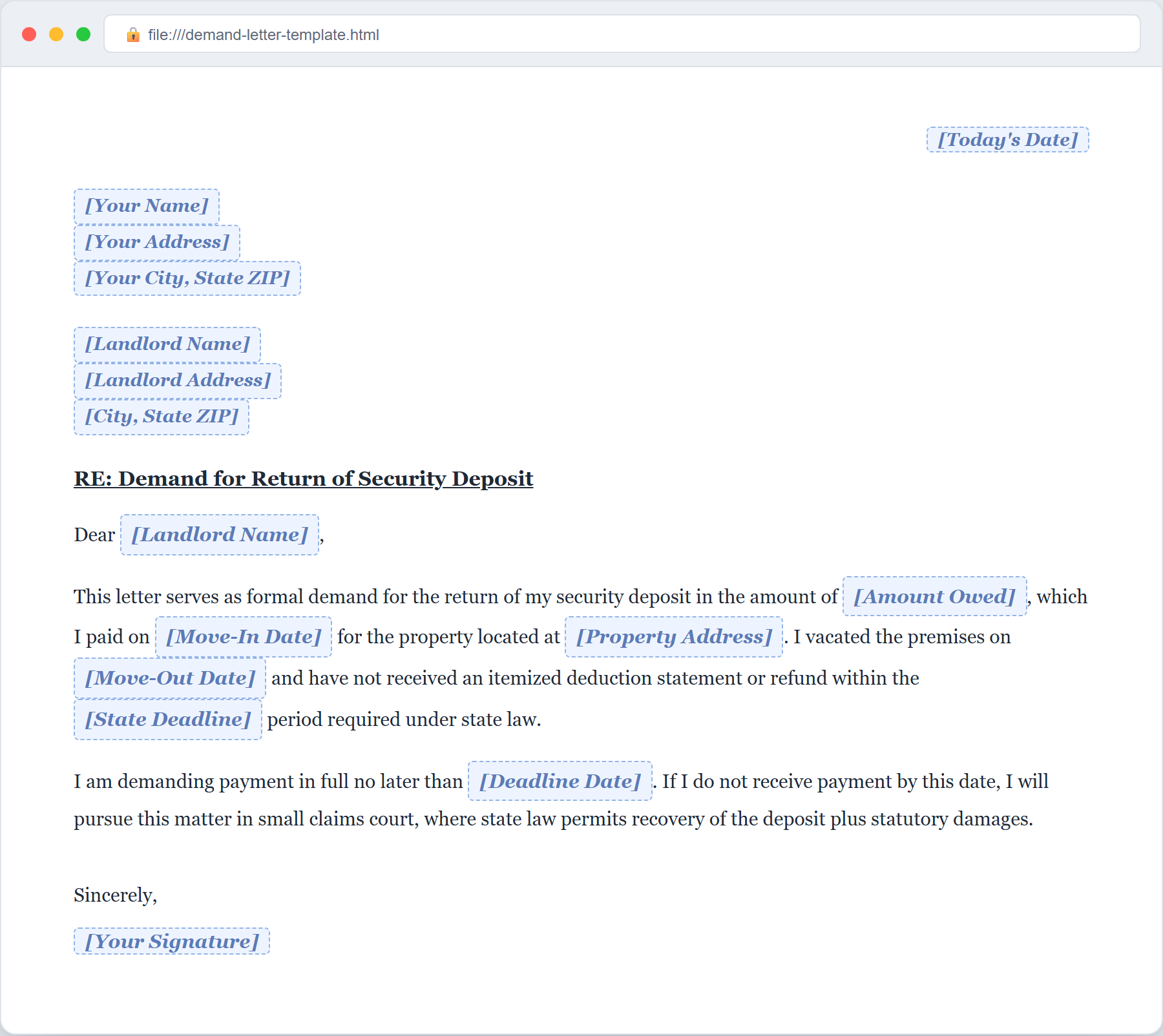 See exactly what you get →
A professionally written demand letter template that puts the other party on notice before you file. Courts expect a demand letter before you sue — and it gets you paid 40% of the time without ever stepping foot in a courtroom. Works in all 50 states.
Code SUMMER20 = 20% off at checkout