How to Sue a Contractor in Georgia Small Claims Court
Incomplete work, shoddy repairs & contractor fraud
In Georgia, contractor disputes are handled in the Magistrate Court. You can sue for up to $15,000 without a lawyer — making small claims the fastest and most affordable way to resolve a contractor dispute. Hiring a contractor who disappears mid-job or delivers substandard work is frustrating — and costly. Small claims court is one of the most effective tools consumers have to recover money from bad contractors without spending thousands on a lawyer.
Georgia tip
Georgia's Magistrate Court is one of the most accessible small claims systems in the US.Success tip
Documentation of the agreed scope of work and photos of incomplete/defective work significantly increase your odds of winning.Georgia-Specific Procedure
Georgia requires residential contractors to be licensed for projects over $2,500; filing a complaint with the Georgia State Licensing Board for Residential and General Contractors can support your small claims case. You can sue in Magistrate Court up to $15,000.
Small Claims Demand Letter Template
$300+$14you keep $286+A professionally written demand letter template that puts the other party on notice before you file. Courts expect a demand letter before you sue — and it gets you paid 40% of the time without ever stepping foot in a courtroom. Works in all 50 states.
See exactly what you get →Code SUMMER20 = 20% off at checkout
What You Can Sue a Contractor For in Georgia
- ✓ Contractor abandoned the job before completion
- ✓ Work was defective or not up to code
- ✓ Contractor overcharged or billed for work not done
- ✓ Materials paid for but not installed
- ✓ Contractor damaged your property during the job
- ✓ Deposit paid but work never started
Georgia Small Claims — Key Facts
Look Up the Contractor's Legal Name Before Filing
To sue a contractor in Georgia, you must use their exact registered legal name on the court filing. An incorrect name can get your case dismissed. Search the official Georgia Secretary of State database to find their correct legal name and registered agent address.
Step-by-Step: Suing a Contractor in Georgia
Confirm your claim is within Georgia's $15,000 limit
Georgia's small claims limit is $15,000. If your damages are higher, you can reduce your claim to the limit or file in Georgia civil court. Use our Georgia Small Claims Limit guide for the full details.
Send a demand letter first
Send a certified mail demand letter giving the contractor 10–14 days to refund or return to complete the work. Courts view this positively and it may resolve the dispute without trial. Courts in Georgia expect plaintiffs to have made a good-faith attempt to resolve the dispute. A demand letter also creates a paper trail and often prompts payment without any court filing.
Gather your evidence
Your case is only as strong as your evidence. Collect everything before filing — see the checklist below for exactly what you need for a contractor dispute.
Find the right Georgia courthouse
File at the Magistrate Court in the Georgia county where the contractor is located, does business, or where the dispute occurred. Before filing, look up the contractor's correct legal name and registered agent on the Georgia Secretary of State →. Using the wrong legal name is a common reason cases are dismissed.
Pay the filing fee ($45–$75)
Georgia small claims filing fees range from $45 to $75 depending on your claim amount. Use our Georgia Filing Fee Calculator to find the exact amount for your claim. Keep your file-stamped copy.
Serve the defendant properly
The contractor must be formally notified of the lawsuit. Georgia courts provide specific instructions — follow them exactly. Improper service is one of the most common reasons cases are dismissed.
Present your case at the hearing
Bring 3 organized copies of all evidence. Present your case in order: what happened, how much you lost, and why the contractor is responsible. Most Georgia small claims hearings last 15–30 minutes. Stay calm, stick to facts, and let the judge ask questions.
Sample Demand Letter: Contractor Dispute
Send this demand letter via certified mail before filing. Courts view prior good-faith attempts favorably, and many disputes settle at this stage. Replace the bracketed placeholders with your details.
I am writing to demand payment of $[AMOUNT] in compensation for [INCIDENT DESCRIPTION], which arose from work performed by [DEFENDANT NAME] on or around [DATE] that was incomplete, defective, or failed to meet the agreed specifications. As [PLAINTIFF NAME], I hired you under a written agreement, paid in full or in part, and the work you delivered has required remediation at my expense or remains unfinished. This letter is my formal demand for reimbursement of costs incurred to correct your work, or for a refund of monies paid for work not completed. If I do not receive payment or a written resolution within 14 days, I will file a claim against you in small claims court.
This is a template only — not legal advice. Consult an attorney if your situation is complex or the amount is significant.
Evidence Checklist: Suing a Contractor in Georgia
Tips for Winning Your Contractor Case in Georgia
Get at least one written estimate from another licensed contractor to fix or finish the work — this becomes your damages evidence.
Check if the contractor is licensed and bonded in your state. Unlicensed contractors may have committed fraud — a stronger claim.
If the contractor is a business (LLC or corporation), sue the business entity AND the individual owner if they personally dealt with you.
Bring the original contract, any change orders, and all payment receipts. Courts need to see the full financial picture.
Ready to File? Prepare Your Documents First
LegalZoom helps you draft a demand letter and small claims filing documents for Georgia — reviewed by attorneys. Most cases settle after a proper demand letter.
A local attorney bills $300+/hour for this. LegalZoom does it flat-fee, online.
Other Georgia Small Claims Guides
Small Claims Demand Letter Template
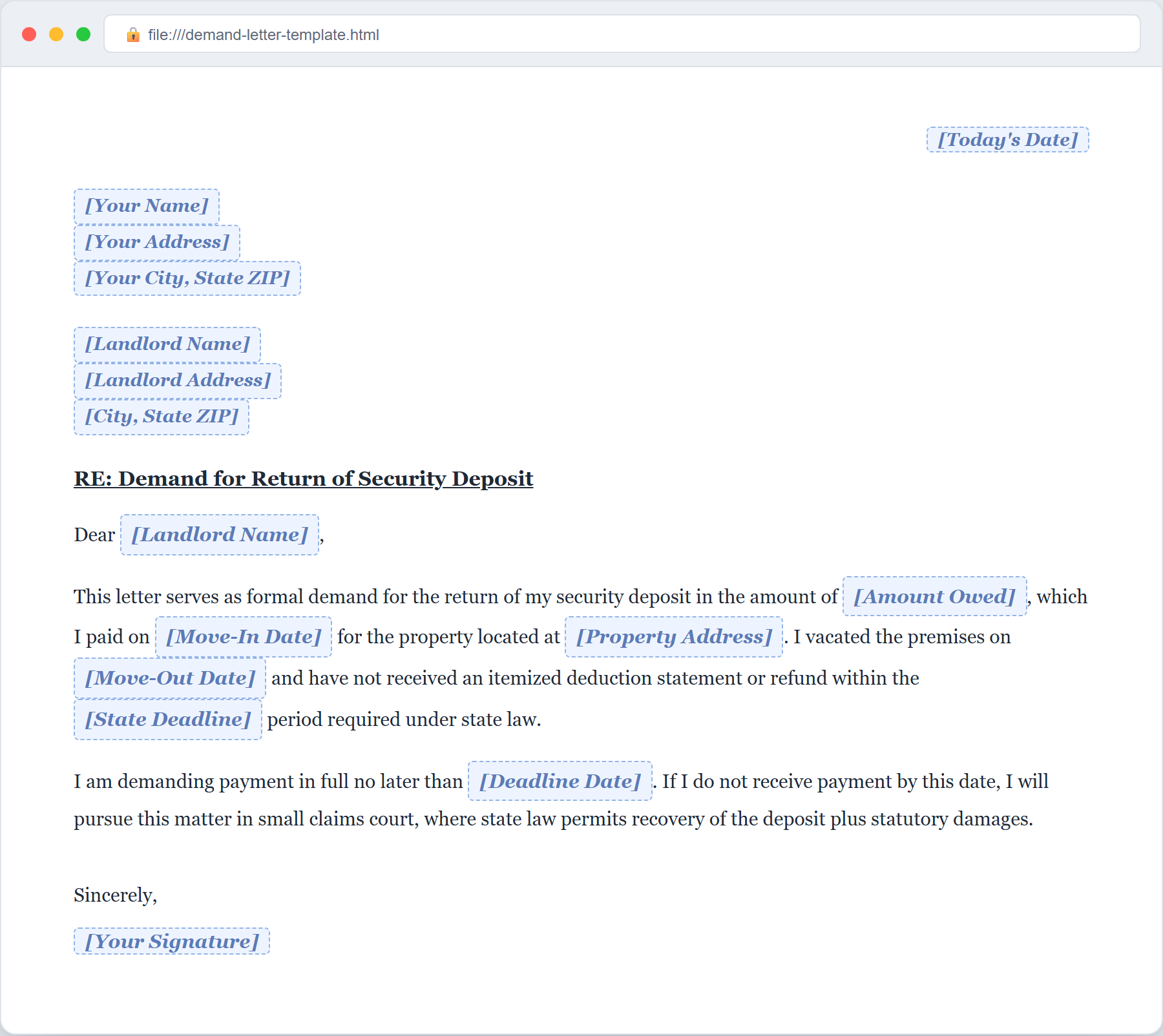 See exactly what you get →
A professionally written demand letter template that puts the other party on notice before you file. Courts expect a demand letter before you sue — and it gets you paid 40% of the time without ever stepping foot in a courtroom. Works in all 50 states.
Code SUMMER20 = 20% off at checkout