How to Sue a Cell Phone Company in Small Claims Court
Overcharges, broken contracts & deposit disputes
Cell phone carriers — AT&T, Verizon, T-Mobile, and others — are among the most complained-about companies in the US. When your carrier overcharges you, breaks a contract promise, locks your phone without authorization, or refuses to return a deposit, small claims court is often the only real leverage consumers have. FCC complaints and BBB reports rarely produce a refund. But filing a small claims case frequently prompts carriers to settle quickly — the administrative cost of sending a representative to court on a $200 dispute exceeds the amount at stake. Bring itemized billing records, screenshots of your plan terms, and any written communications where the carrier acknowledged the error.
Success tip
Carriers often settle small claims cases before the hearing date, especially when the customer has clear billing records and written promises.Small Claims Demand Letter Template
 See exactly what you get →
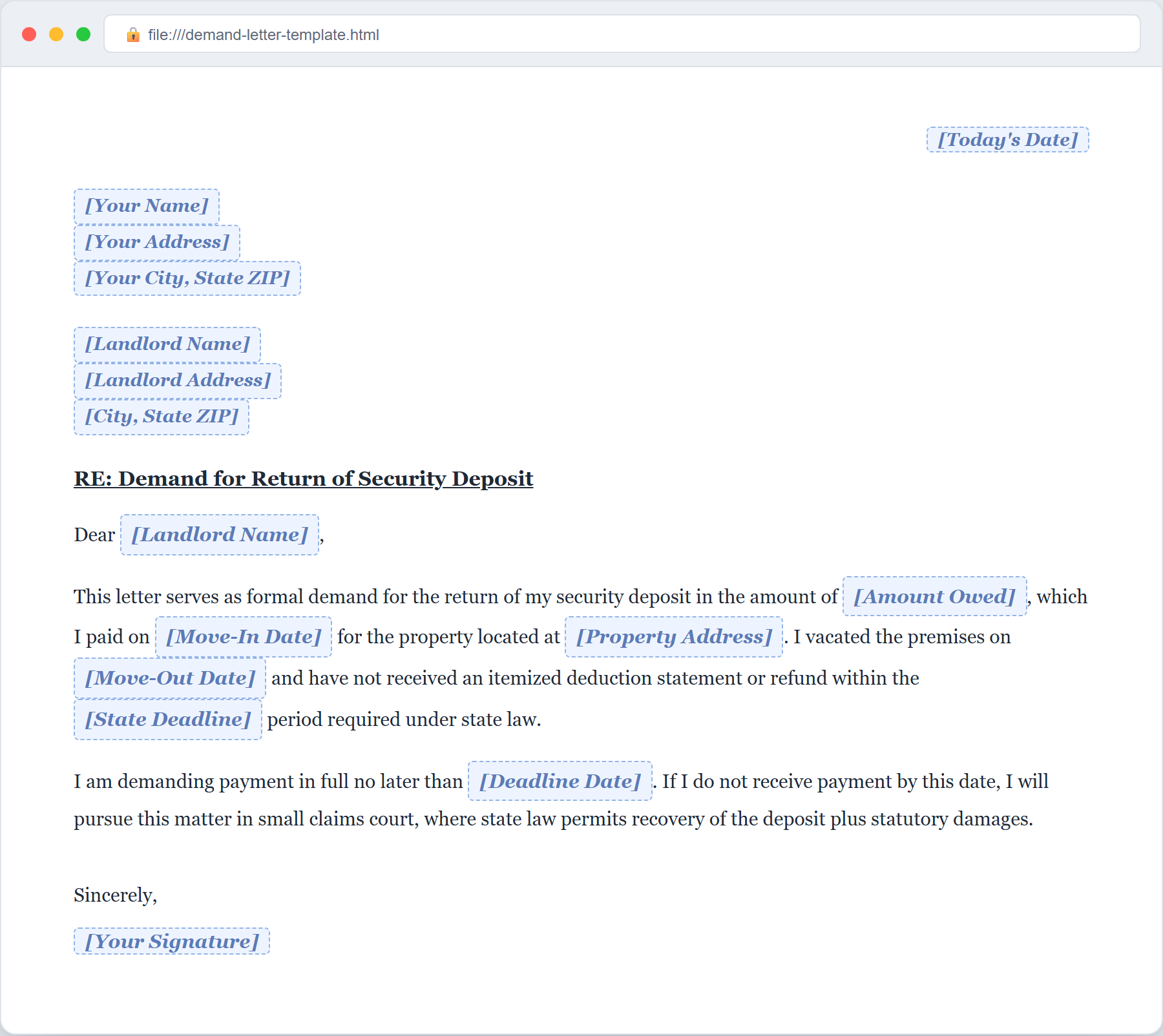
A professionally written demand letter template that puts the other party on notice before you file. Courts expect a demand letter before you sue — and it gets you paid 40% of the time without ever stepping foot in a courtroom. Works in all 50 states.
- 6 variants included: General, Landlord/Tenant, Contractor, Unpaid Loan, Property Damage, Follow-Up Notice
- Fillable HTML — open in any browser, click fields to type, print to PDF when done
- Editable Word (.docx) — fill in Microsoft Word using Find & Replace
- Certified mail instructions included — how to send, what to keep as proof
- Instant download — ready to fill in and send today
Code SUMMER20 = 20% off at checkout
Secure checkout via Payhip · Instant delivery · 30-day guarantee
What You Can Sue a Cell Phone Company For
- ✓ Overcharged on monthly bill compared to promised plan price
- ✓ Early termination fee charged despite carrier breaking contract first
- ✓ Security deposit not returned after account closed in good standing
- ✓ Carrier promised to pay off your old phone and didn't
- ✓ Data throttled contrary to 'unlimited' plan promise
- ✓ Unauthorized charges or premium services added without consent
Step-by-Step: How to Sue a Cell Phone Company
Check your state's small claims limit
Small claims court handles money disputes only — typically $2,500 to $25,000 depending on your state. Use our Small Claims Limit Calculator to find your state's exact maximum. If your damages exceed the limit, you can reduce your claim to fit or file in a higher civil court.
Send a demand letter first
File an FCC complaint at fcc.gov/consumers/guides/filing-informal-complaint first — carriers must respond to FCC complaints within 30 days, which often produces a resolution before you even file in court. Courts expect plaintiffs to have made a good-faith attempt to resolve the dispute before filing. A demand letter also creates a paper trail that becomes evidence.
Gather your evidence
Your case is only as strong as your evidence. Start collecting everything now — before filing — so you're fully prepared for your hearing. See the evidence checklist below for exactly what you need.
Find the right court and defendant information
File in the small claims court for the county where the cell phone company is located, does business, or where the dispute occurred. You'll need the defendant's full legal name and address. For businesses, check your state's Secretary of State website for the correct legal entity name and registered agent address.
File your claim and pay the filing fee
Submit the plaintiff's claim form at the courthouse (or online in many states). Filing fees range from $30–$300 depending on your state and claim amount. Use our Filing Fee Calculator to find the exact cost. Keep your file-stamped copy.
Serve the defendant
The defendant must be formally notified of the lawsuit. Many states allow certified mail service; others require a sheriff or process server. Follow the court's instructions exactly — improper service is one of the most common reasons cases get dismissed.
Prepare and attend your hearing
Bring 3 organized copies of all evidence (one for the judge, one for the defendant, one for yourself). Present your case in order: what happened, how much you lost, and why the defendant is responsible. Let the judge ask questions. Most small claims hearings last 15–30 minutes.
Evidence Checklist: Suing a Cell Phone Company
Expert Tips for Your Cell Phone Company Case
File an FCC complaint before going to court — it's free, carriers take them seriously, and it often resolves billing disputes without litigation.
Always get plan price promises in writing (chat transcript, email) — verbal promises from customer service are almost impossible to prove.
Cell carriers have arbitration clauses, but most allow small claims court as an exception — check your specific carrier's agreement.
Screenshot every chat conversation with customer service — they often don't send email confirmations.
Ready to File? Prepare Your Documents First
LegalZoom helps you draft a professional demand letter and small claims filing documents — reviewed by attorneys. A strong demand letter resolves many disputes before you ever set foot in court.
A local attorney bills $300+/hour for this. LegalZoom does it flat-fee, online.
Related Guides
Small Claims Demand Letter Template
See exactly what you get →
A professionally written demand letter template that puts the other party on notice before you file. Courts expect a demand letter before you sue — and it gets you paid 40% of the time without ever stepping foot in a courtroom. Works in all 50 states.
Code SUMMER20 = 20% off at checkout