How to Collect a Judgment in South Carolina (2026)
You won your case — now get paid. This guide covers every enforcement tool available in South Carolina: wage garnishment, bank levies, and property liens.
Wage garnishment not available in South Carolina
South Carolina does not allow wage garnishment for most consumer debts. Your primary enforcement options are bank account levies and real property liens.Small Claims Demand Letter Template
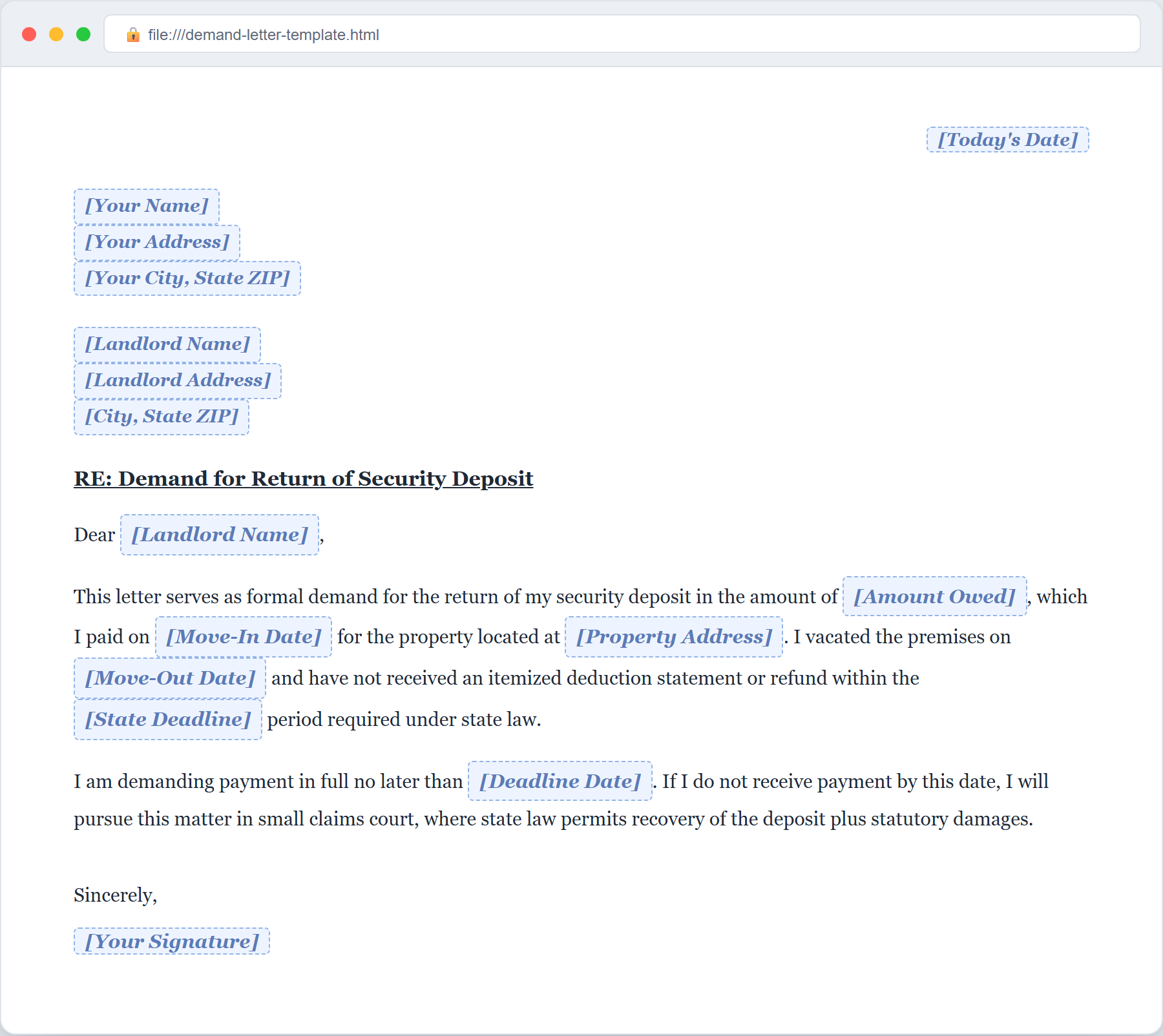 See exactly what you get →
A professionally written demand letter template that puts the other party on notice before you file. Courts expect a demand letter before you sue — and it gets you paid 40% of the time without ever stepping foot in a courtroom. Works in all 50 states.
- 6 variants included: General, Landlord/Tenant, Contractor, Unpaid Loan, Property Damage, Follow-Up Notice
- Fillable HTML — open in any browser, click fields to type, print to PDF when done
- Editable Word (.docx) — fill in Microsoft Word using Find & Replace
- Certified mail instructions included — how to send, what to keep as proof
- Instant download — ready to fill in and send today
Code SUMMER20 = 20% off at checkout
Secure checkout via Payhip · Instant delivery · 30-day guarantee
Step-by-Step: Collecting Your Judgment in South Carolina
Wait for voluntary payment (and let interest accrue)
After the court enters judgment, give the debtor 30 days to pay voluntarily. Many debtors pay to avoid further enforcement action. Meanwhile, your judgment earns 8.25% interest per year — a modest but growing amount. Keep a record of the judgment amount and date entered.
Find the debtor's assets
You cannot collect from a debtor whose assets you cannot find. Use these tools: (1) Debtor's examination — ask the court to order the debtor to appear and answer questions about their finances. (2) Interrogatories — written questions the debtor must answer under oath. (3) Public records — check county property records, business registrations, and vehicle registrations. (4) A licensed process server or skip-tracer can often locate employment and banking information.
Get a Writ of Execution
Return to the Magistrate Court and request a Writ of Execution (sometimes called a Writ of Fi. Fa. or Execution Order). This document authorizes the county Sheriff or court officer to seize the debtor's non-exempt assets. There is usually a small fee to obtain the writ. Writs are typically valid for a limited time (60–180 days depending on South Carolina rules), so act promptly.
Wage garnishment — not available in South Carolina
South Carolina does not permit wage garnishment for most consumer debts. If the debtor's only income is wages, you will need to rely on bank levies (if the wages are deposited into an accessible account) or wait for the debtor to acquire other assets. Exceptions exist for child support, alimony, state taxes, and student loans.
Levy the debtor's bank accounts
Serve the Writ of Execution on the debtor's bank or credit union (typically via the Sheriff). The bank must freeze the account and turn over funds up to the judgment amount — minus any applicable exemptions. In South Carolina, certain funds may be protected (e.g., Social Security, disability payments, and sometimes recently deposited wages). A bank levy is a one-time action; if the account is empty, you may need to levy again later.
Record a judgment lien on real property
File a certified copy of the judgment (or a "Abstract of Judgment") with the county recorder or clerk of courts in every county where the debtor owns real property. This creates a judgment lien lasting 10 years. The debtor cannot sell, refinance, or transfer the property without first satisfying your judgment. The debtor's primary residence is protected up to $58,175 (homestead exemption).
Renew the judgment before it expires
Your judgment is valid for 10 years in South Carolina. Before it expires, file a motion to renew the judgment in the same court — this typically extends it for another 10 years. Do not wait until the last minute. A lapsed judgment cannot be enforced and may require a new lawsuit.
Need Help Collecting Your Judgment?
A collections attorney can often recover judgments faster using legal tools not available to self-represented parties. Many work on contingency.
A local attorney bills $300+/hour for this. LegalZoom does it flat-fee, online.
South Carolina Judgment Collection — Key Facts
| Judgment valid for | 10 years (renewable) |
| Property lien duration | 10 years |
| Post-judgment interest | 8.25% per year |
| Wage garnishment | Not available for most consumer debts in South Carolina |
| Bank account levy | Available |
| Homestead exemption | $58,175 |
| Vehicle exemption | $5,825 |
South Carolina note
South Carolina does NOT allow wage garnishment for most consumer debts. Bank account levies and property liens remain available. File the judgment with the county clerk of court to create a property lien. The homestead exemption is $58,175. Judgments expire after 10 years but can be renewed.Source: South Carolina Courts ↗. Always verify current rules with the court clerk or a licensed attorney.
Already Filed? South Carolina Small Claims Basics
If you haven't filed yet, here are the key figures for South Carolina's Magistrate Court.